
Halloween is one of the most fun nights of the year for kids. For a lot of dogs, it’s one of the hardest. Bowls of candy at nose level, strangers in masks, and a doorbell that won’t stop ringing can turn a normal evening into a really stressful one. Here’s what we tell our clients every October.
The Candy Bowl Is The Biggest Danger
- Chocolate. All chocolate is a problem for dogs, and dark and baking chocolate are the worst. Watch for vomiting, diarrhea, restlessness, extra thirst and peeing, a racing heart, and in serious cases, seizures.
- Sugar-free candy and gum. This is the one a lot of people don’t know about. Many sugar-free candies, gums, and mints contain xylitol, a sweetener that is very toxic to dogs. It causes a fast drop in blood sugar, sometimes within 30 minutes to 2 hours, and larger amounts can cause liver failure. A dog can look fine at first, so don’t wait for symptoms before you call.
- Raisins. Those little boxes of raisins some houses hand out are toxic to dogs too.
- Wrappers. Dogs don’t unwrap their candy. Foil and cellophane wrappers can cause vomiting or a blockage in the intestines.
How To Keep The Candy Safe
- Keep the candy bowl up high or behind a closed door, not on the coffee table or by the front door.
- Remind the kids not to share their haul with the dog, and not to stash their bag in their bedroom. Your dog’s nose will find it.
- When the kids dump their candy on the floor to sort and trade, put the dog in another room.
If your dog gets into the candy, call your vet or the ASPCA Animal Poison Control Center at (888) 426-4435 right away. Don’t wait until morning. Grab the wrapper so you can tell them exactly what your dog ate and about how much.
The Doorbell, Over and Over
To your dog, the doorbell means someone is coming into their home. On Halloween it can ring dozens of times in a couple of hours, and every time the door opens there’s a stranger in a costume yelling “trick or treat!” Many dogs never get a chance to settle down between rings, so the stress just keeps building all night.
Signs Your Dog Is Stressed
- Pacing or not able to settle
- Panting when it isn’t hot
- Lip licking, ears pinned back, or tail tucked
- Hiding, or barking at every single ring
- Accidents in the house
What Helps
- Give them a quiet room. Set your dog up away from the front door during peak trick-or-treating hours with their bed, water, and a long-lasting chew or food puzzle. Soft music or a fan can help cover the noise.
- Take the doorbell out of it. Sit outside with the candy bowl, or put a sign on the door asking trick-or-treaters to knock softly.
- Watch the door. Every time the door opens is a chance for a scared dog to bolt. Use a baby gate, a leash, or a closed door. Make sure your dog is wearing ID tags and that their microchip info is up to date.
- Start practicing now. Play a doorbell sound at a low volume and reward your dog for staying calm, then slowly turn it up over several sessions. Even a few short sessions this week can help, and you’ll be ahead of the game when holiday guests start showing up next month.
If your dog’s stress is severe, talk to your vet about whether extra support for that night makes sense.
Should Your Dog Go Trick-or-Treating?
For most dogs, no. It’s dark, it’s crowded, there are kids running and screaming, people in masks, decorations that move and make noise, and candy dropped all over the sidewalk. Even very social dogs can get overwhelmed. Most dogs are happier at home in their quiet room.
If Your Dog Does Come Along
- Keep it short and go early, before the biggest crowds.
- Use a secure leash, a reflective collar or light, and ID tags.
- Watch the ground for dropped candy and wrappers.
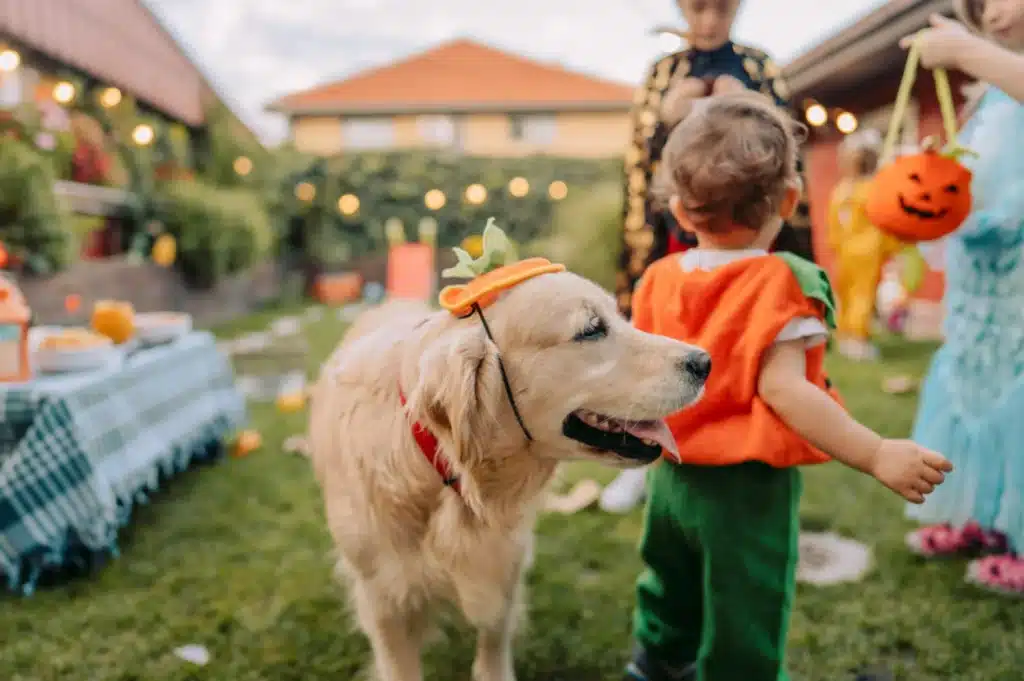
- Only put your dog in a costume if they truly enjoy it. Try it on before the big night, and make sure it doesn’t limit their movement, sight, hearing, or breathing, and has no small pieces they can chew off. A festive bandana is an easy option.
- Head home at the first sign of stress.
The Skills That Make Halloween Easier
Every tip above works better when your dog has a few solid skills:
- Leave it for candy on the sidewalk or the living room floor.
- Drop it for when something already made it into their mouth.
- Place, so your dog has a spot to go and settle when the door opens.
- Calm doorbell manners, so a knock doesn’t send them into a frenzy.
These aren’t just Halloween skills. You’ll use them at Thanksgiving, Christmas, and every time company comes over. If your dog struggles with any of these, our obedience and behavior modification training can help.
Happy Howloween from all of us at All Stage Canine Development!