There is a window in your puppy’s life that closes whether you’re ready or not. It opens around three weeks of age and begins to narrow around sixteen, and most owners miss it entirely.
This is the early puppy socialization period. What happens during these weeks doesn’t just shape how your dog behaves. It shapes who they become.
At All Stage Canine Development, we’ve built our approach around this window because nothing in a dog’s life is more formative, and nothing is more permanent.
Why This Window Is Different From Every Other Stage
Puppies don’t come into the world afraid of anything. During the first few weeks of life, their brains are open. They accept new things easily. Strange sounds, unfamiliar people, new surfaces, different animals, none of it registers as dangerous yet.
That openness starts to close around week eight. From eight to sixteen weeks, the puppy is still highly receptive, but the window is narrowing fast. Experiences during this stretch don’t just get filed away; they get hardwired.
A puppy who meets children, traffic sounds, elevators, and other dogs during this period learns that the world is manageable. A puppy who misses this exposure often spends the rest of their life compensating for it. Fear, reactivity, and anxiety in adult dogs are frequently traced directly back to this window.
This is not a training issue. It’s a developmental one.
What “Socialization” Really Means
Most people think socialization means playtime with other puppies. That’s part of it. But early puppy socialization is much more specific than that.
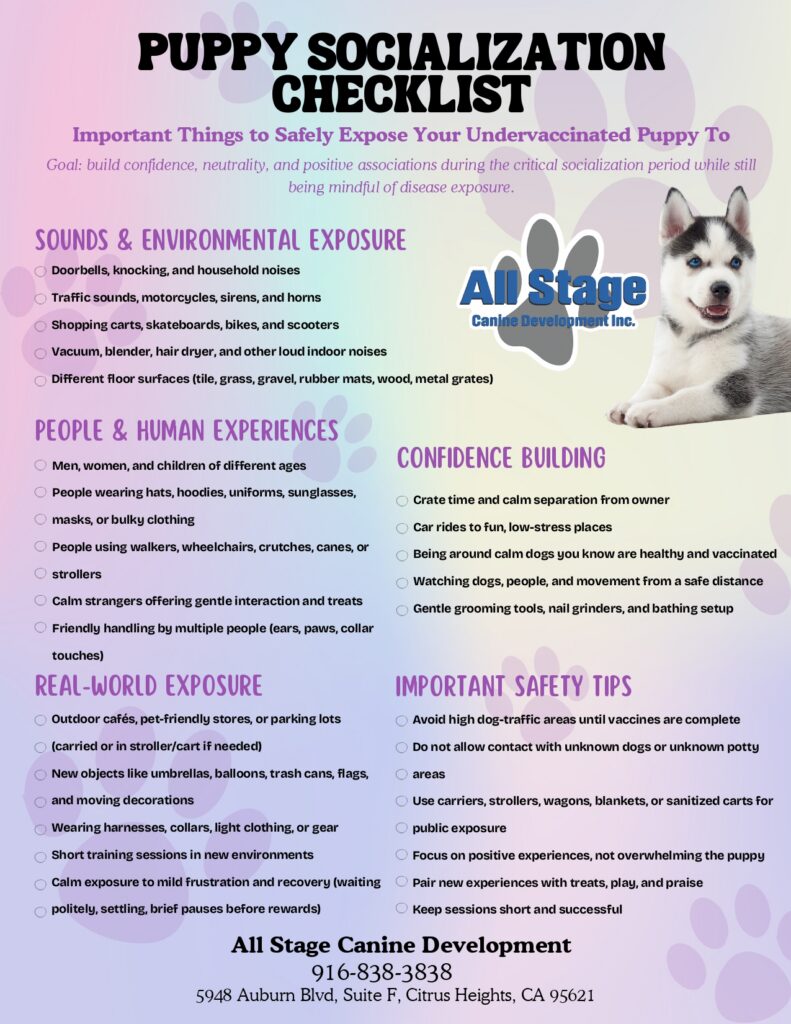
Real socialization is structured, intentional exposure to the full range of things your dog will encounter throughout their life. It includes:
- Different types of people. Men, women, children, people wearing hats or uniforms, people using canes or wheelchairs
- Other animals. Dogs of different sizes, cats, livestock if relevant to the dog’s future environment
- Novel surfaces. Gravel, grates, grass, tile, stairs, uneven ground
- Sounds. Traffic, appliances, crowds, thunderstorms, loud equipment
- Handling. Ears, paws, mouth, being picked up, being restrained gently
- Environments. Indoors and outdoors, busy and quiet, urban and rural
The goal is not to overwhelm the puppy. It is to build a foundation of neutral or positive associations with the world so that when your dog encounters these things as an adult, they respond with calm curiosity instead of fear.
What Early Socialization Actually Looks Like
Done well, early socialization never looks chaotic. It looks calm, deliberate, and closely supervised.
A handler introduces something new (a person, a sound, a surface) and watches the puppy’s response carefully. If the puppy is curious and engaged, great. If they hesitate, the handler creates distance, keeps the energy neutral, and gives the puppy time to acclimate before any positive reinforcement is offered.
Flooding (forcing a puppy into an overwhelming situation and waiting for them to “get over it”) is the opposite of socialization. It creates the very fear response we are trying to prevent.
This is where professional guidance makes a real difference. In our early puppy work at All Stage Canine Development, we track how each puppy responds across different categories of exposure and adjust the plan accordingly. No two puppies are the same, and a good socialization plan reflects that.
What Happens If the Window Closes Without Enough Exposure
This is the part that owners wish someone had told them sooner.
A puppy who reaches adolescence (around six to nine months) without solid early socialization doesn’t simply catch up later. The brain has moved on. What required low effort during the socialization window now requires significant, sustained work to address.
That doesn’t mean it’s hopeless. Adult dogs can absolutely improve. But the ceiling is lower, the process is longer, and the results are less predictable than what proper early exposure would have produced.
Common outcomes of under-socialized dogs include:
- Reactivity on leash toward other dogs or strangers
- Fear-based aggression when startled or cornered
- Generalized anxiety in new environments
- Difficulty at the vet, groomer, or in any high-stimulation setting
- Noise phobias that worsen over time
These are not character flaws. They are the predictable results of a critical developmental period going unaddressed.
A Note for Breeders and Early Handlers
The socialization window doesn’t start when your puppy comes home. It starts at three weeks old, while they are still with the breeder or in a rescue environment.
What happens in those first weeks (before the puppy is yours to shape) matters enormously. Breeders who handle puppies daily, expose them to household sounds, and introduce them to gentle novelty are giving those dogs a head start that no amount of later training can fully replicate.
If you are selecting a puppy, ask about early neurological stimulation and the handling protocols used in the first weeks. The answers will tell you a great deal about what you’re bringing home.
What You Can Do Right Now
If your puppy is under 16 weeks, the window is still open. Every day counts.
Here is where to start:
- Expose your puppy to at least one new thing each day. New person, new sound, new surface. Keep it brief and positive.
- Watch your puppy’s body language. Relaxed ears, loose body, curious sniffing are good signs. Tucked tail, whale eye, or freezing means back off and give more space.
- Avoid forcing interactions. Let the puppy approach on their own terms whenever possible.
- Work with people who understand development, not just obedience.
If your puppy is past 16 weeks, don’t panic. Start now. The window has narrowed, but your dog is still learning. Consistent, thoughtful exposure still makes a difference.
Explore our programs to find the right fit for where your puppy is right now, and where you want them to be.
The most important thing you can do for your puppy is start before you feel ready. The window doesn’t wait.